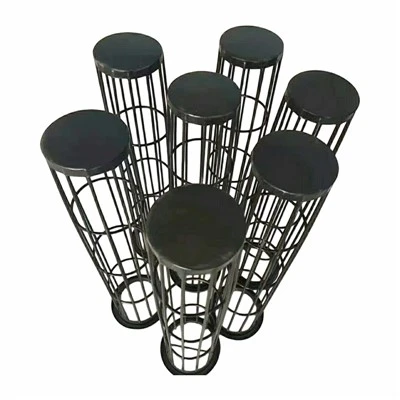
The filtration area of a Boiler Baghouse is a critical parameter that significantly influences its performance and efficiency in removing particulate matter from flue gases. As a leading Boiler Baghouse supplier, we understand the importance of this concept and are committed to providing our customers with the best solutions tailored to their specific needs.
1. Definition and Significance
The filtration area of a Boiler Baghouse refers to the total surface area of the filter bags available for the filtration process. It is measured in square meters or square feet. A larger filtration area allows for more efficient removal of dust particles from the gas stream. When the flue gas passes through the filter bags, the dust particles are trapped on the surface of the bags, and the clean gas is then released into the atmosphere.
The significance of the filtration area lies in its direct impact on the baghouse's capacity and performance. A larger filtration area can handle a higher volume of gas flow with lower pressure drop, which means better energy efficiency and longer filter bag life. On the other hand, an insufficient filtration area may lead to high pressure drop, frequent filter bag cleaning, and reduced overall performance of the baghouse.
2. Factors Affecting the Filtration Area
Several factors need to be considered when determining the appropriate filtration area for a Boiler Baghouse.
2.1 Gas Flow Rate
The gas flow rate is one of the most important factors. It represents the volume of flue gas that needs to be treated per unit of time. A higher gas flow rate requires a larger filtration area to ensure that the gas can pass through the filter bags at an appropriate velocity. If the gas flow rate is too high relative to the filtration area, the dust particles may not have enough time to be effectively captured, leading to poor filtration efficiency.
2.2 Dust Concentration
The dust concentration in the flue gas also affects the filtration area. Higher dust concentrations mean that more dust needs to be removed, which requires a larger filtration area. If the dust concentration is very high and the filtration area is insufficient, the filter bags may become clogged quickly, resulting in increased pressure drop and reduced performance.
2.3 Filter Media Properties
The properties of the filter media, such as the porosity, fiber diameter, and surface treatment, play a crucial role in determining the filtration area. Different filter media have different filtration efficiencies and dust-holding capacities. For example, a filter media with a high porosity may allow for a higher gas flow rate but may have a lower dust-holding capacity, requiring a larger filtration area to compensate.
2.4 Operating Conditions
The operating conditions, including temperature, humidity, and chemical composition of the flue gas, can also impact the filtration area. High temperatures may require the use of special filter media that can withstand the heat, and these media may have different filtration characteristics. Humidity can affect the adhesion of dust particles to the filter bags, and the chemical composition of the flue gas may cause corrosion or other damage to the filter media, which may require a larger filtration area to ensure reliable operation.


3. Calculation of the Filtration Area
The calculation of the filtration area is based on the gas flow rate, dust concentration, and the desired filtration efficiency. The following is a general formula for calculating the filtration area:
[A=\frac{Q}{v}]
where (A) is the filtration area ((m^{2}) or (ft^{2})), (Q) is the gas flow rate ((m^{3}/h) or (ft^{3}/min)), and (v) is the filtration velocity ((m/min) or (ft/min)).
The filtration velocity is a key parameter that needs to be carefully selected based on the factors mentioned above. A typical filtration velocity for a Boiler Baghouse ranges from 0.5 to 2 m/min (1.6 to 6.6 ft/min), depending on the type of filter media, dust characteristics, and operating conditions.
For example, if the gas flow rate is (10,000 m^{3}/h) and the selected filtration velocity is 1 m/min, the filtration area can be calculated as follows:
First, convert the gas flow rate to (m^{3}/min): (Q = \frac{10000}{60}\approx166.7 m^{3}/min)
Then, use the formula (A=\frac{Q}{v}): (A=\frac{166.7}{1}=166.7 m^{2})
4. Our Solutions as a Boiler Baghouse Supplier
As a Boiler Baghouse supplier, we offer a wide range of products and services to meet the diverse needs of our customers.
4.1 Customized Design
We understand that each customer's application is unique, and we provide customized design solutions for Boiler Baghouses. Our experienced engineers will work closely with you to analyze your specific requirements, including gas flow rate, dust concentration, operating conditions, and space limitations. Based on this analysis, we will design a Boiler Baghouse with the appropriate filtration area and other parameters to ensure optimal performance.
4.2 High - Quality Filter Media
We use high - quality filter media in our Boiler Baghouses. Our filter media are carefully selected to provide excellent filtration efficiency, high dust - holding capacity, and long service life. We offer a variety of filter media options, including polyester, polypropylene, PTFE, and ceramic, to suit different operating conditions.
4.3 Advanced Cleaning Systems
To maintain the performance of the Boiler Baghouse, we incorporate advanced cleaning systems. These systems can effectively remove the dust accumulated on the filter bags, reducing the pressure drop and extending the filter bag life. Our cleaning systems include pulse - jet cleaning, reverse - air cleaning, and shaking cleaning, and we will select the most suitable cleaning method based on the specific application.
4.4 After - Sales Service
We provide comprehensive after - sales service to ensure the long - term reliable operation of our Boiler Baghouses. Our service team is available 24/7 to provide technical support, maintenance, and replacement of filter bags and other components.
5. Related Products
In addition to Boiler Baghouses, we also offer other dust removal equipment, such as Wood Working Dust Collectors, Mining Dust Collector, and High Temperature Cartridge Dust Collector. These products are designed to meet the specific dust removal needs of different industries.
6. Contact Us for Procurement
If you are interested in our Boiler Baghouses or other dust removal equipment, we encourage you to contact us for procurement. Our sales team is ready to provide you with detailed product information, quotations, and technical support. We are committed to helping you find the best dust removal solutions for your business.
References
- "Industrial Air Pollution Control Technology" by David C. Montgomery
- "Baghouse Handbook" by Donald W. Cooper and F. C. Alley